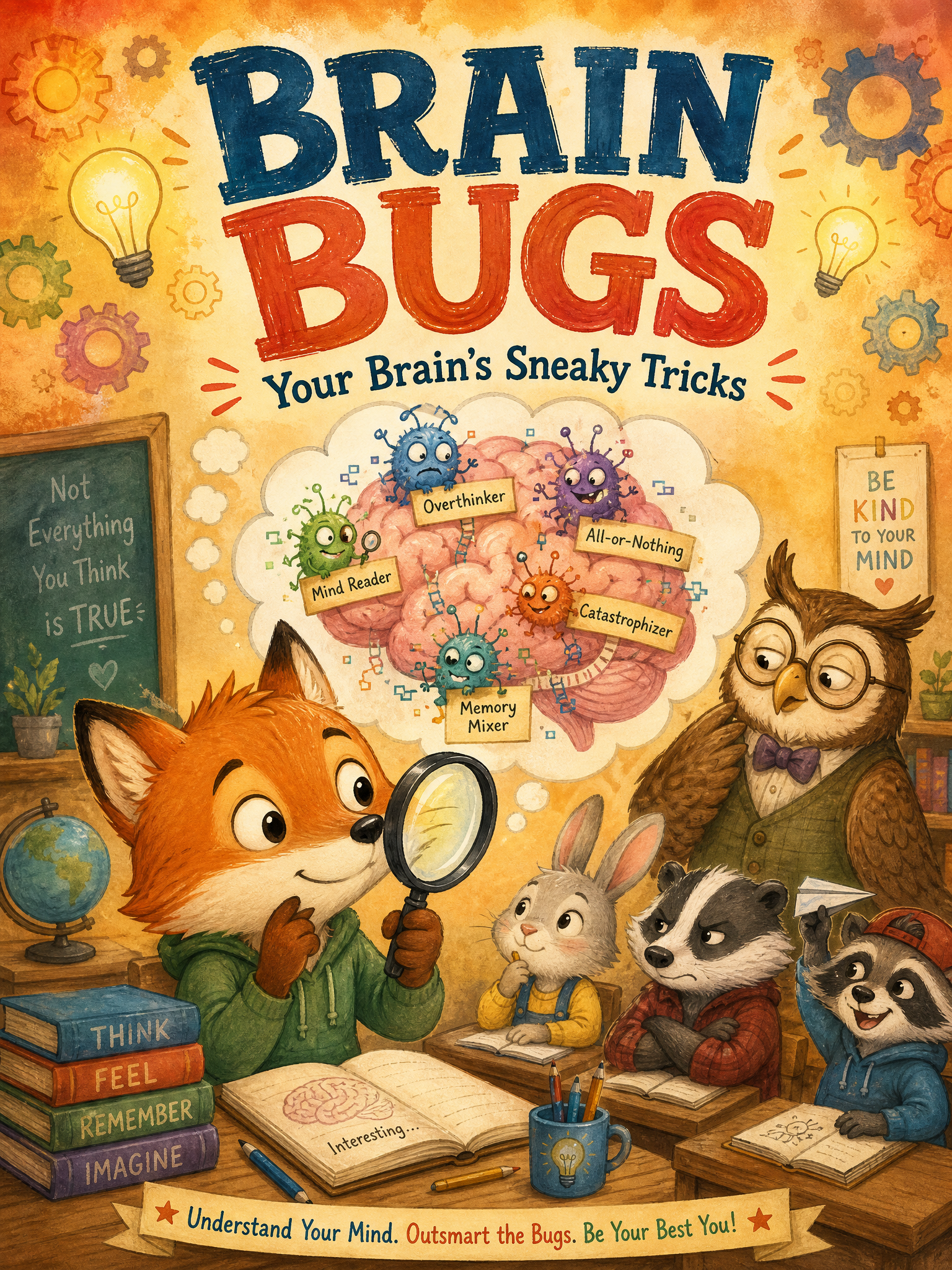
Your Brain's Sneaky Tricks
Your brain is amazing. But it has some sneaky glitches.
Your brain is the most powerful machine in the known universe. It keeps you breathing, helps you learn new things, and lets you imagine entire worlds that don't exist. Pretty impressive, right?
But here's the thing: your brain also cheats.
Not on purpose. Your brain processes millions of pieces of information every single day, and to keep up, it takes shortcuts. Scientists call these shortcuts heuristics. Most of the time, they work great. They help you make fast decisions without having to think about every little thing.
Sometimes those shortcuts go wrong. Your brain takes a quick path and lands on the wrong answer — and the sneaky part? It feels completely right.
This book covers 12 brain bugs that affect everyone — kids, adults, scientists, athletes, even geniuses. The first step to beating them is learning to spot them. Once you see the glitch, you can debug your thinking.
Ready to meet the bugs? Let's go!
"The eye sees only what the mind is prepared to comprehend." — Robertson Davies
"I Knew It All Along!"
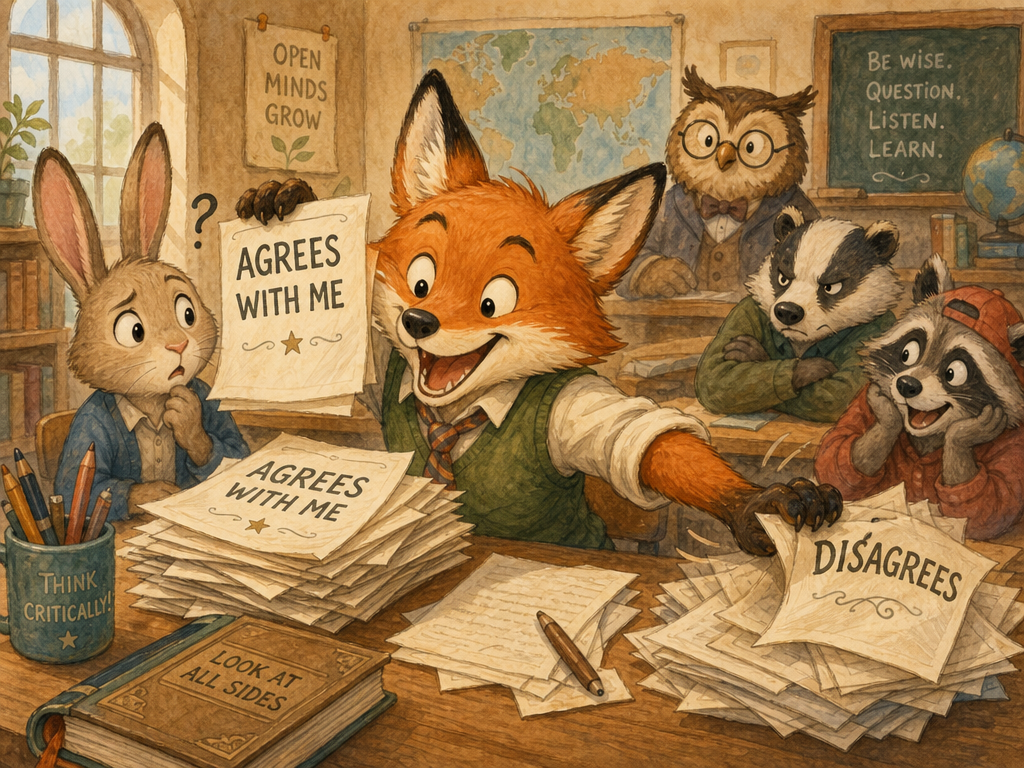
Confirmation bias is when your brain only notices information that agrees with what you already believe — and ignores or dismisses everything that doesn't. It's like wearing tinted glasses: everything looks the color you expect.
AT SCHOOL
Mia's brain zooms in on the 2 wrong answers and ignores the 18 correct ones. She already believes she's bad at math, so her brain hunts for evidence that agrees.
WITH FRIENDS
Once you decide someone doesn't like you, your brain collects every small clue that agrees and explains away every clue that doesn't.
ON SOCIAL MEDIA
Social media algorithms feed you more of what you already like. Your feed becomes an echo chamber that makes your existing opinions feel like facts.
ABOUT SPORTS
When you're rooting for your team, you notice every bad call against them and ignore every bad call in their favor. Same game, completely different experience.
Your brain LOVES being right. It feels good to have your beliefs confirmed, like getting a little reward. So your brain automatically filters information to give you that "I knew it!" feeling. It's faster and more comfortable than actually questioning what you believe.
Ask: "Am I only looking at evidence that agrees with me? What would someone who disagrees point to?" Actively search for information that challenges your belief. If your opinion can survive that challenge, it's probably a strong one.
What brain bug is happening here? What would a fairer way to judge the team look like?
"The First Number Wins"
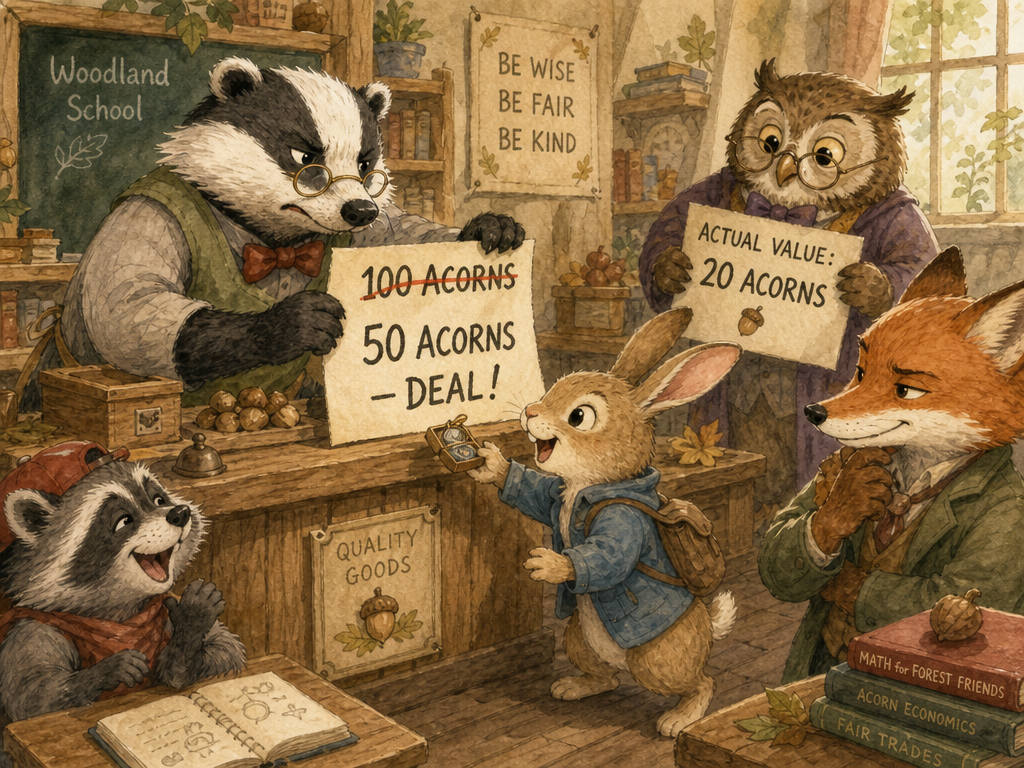
Anchoring bias is when you get stuck on the first piece of information you hear (the "anchor"), and everything after that gets judged compared to it — even when the anchor is totally random or irrelevant.
AT THE STORE
The $80 is the anchor. Your brain compares everything to it, so $40 feels like a steal — even if the shirt was never worth $80 in the first place.
IN CLASS
The first number the teacher said (10 or 100) pulled each student's guess in that direction. The anchor changed their answer even though it was random!
AT A FUNDRAISER
That "suggested" number is the anchor. It makes you adjust your donation upward, even if $5 was perfectly generous.
ABOUT GRADES
Same score (85), but it feels totally different depending on the anchor (your first score). Your friend is disappointed because 95 set a high anchor.
Your brain needs a starting point when it doesn't know the answer. So it latches onto whatever number or fact it hears first and adjusts from there. The problem? It usually doesn't adjust enough. The anchor has a magnetic pull that's hard to escape.
Ask: "Where did this number come from? Is it actually meaningful, or is it just the first thing I heard?" Before looking at the price tag, decide what something is worth to YOU first.
What's the anchor? Did the game's actual value change, or just your perception?
"If I Can Picture It, It Must Be Common"
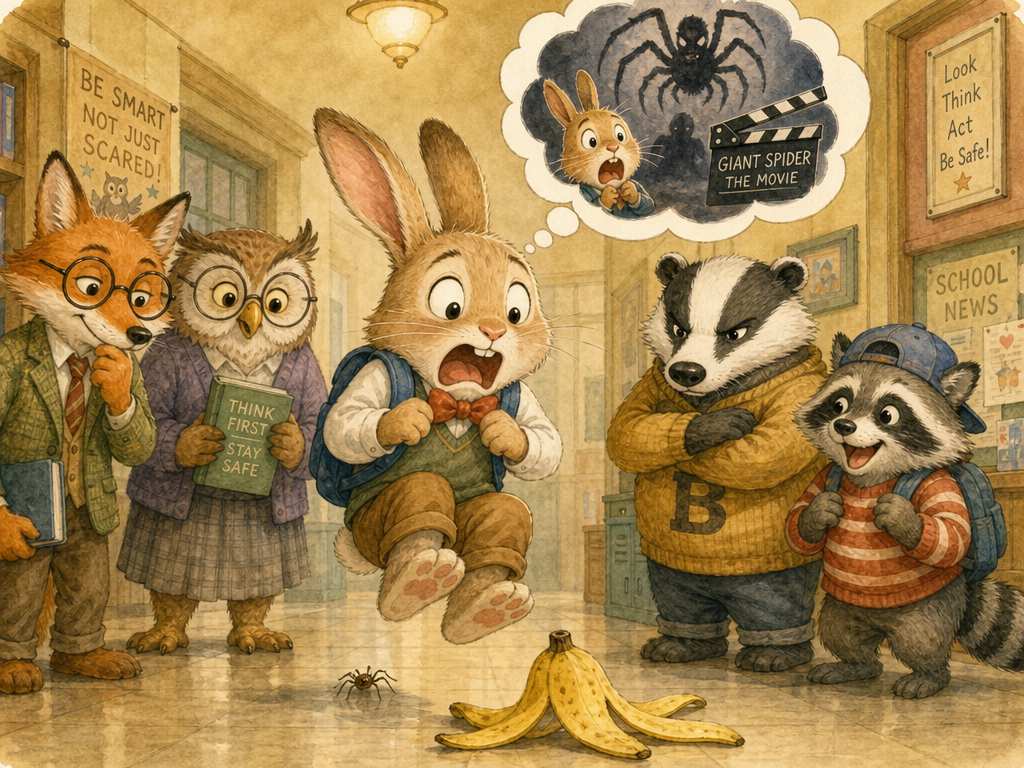
The availability heuristic is when you judge how likely something is based on how easily you can remember an example. If it pops into your mind quickly, your brain assumes it happens all the time.
ABOUT FLYING
Plane crashes make dramatic, memorable news stories, so they come to mind easily. Car accidents happen way more often but don't make the evening news. Your brain confuses "easy to remember" with "happens a lot."
AT SCHOOL
The painful memory of being picked last is vivid and emotional, so it's easy to recall. The times you were picked first? Your brain didn't bother filing those away as strongly.
ABOUT ANIMALS
Shark attack movies and news stories are dramatic and memorable. Nobody makes a horror movie called "Mosquito Week." So your brain thinks sharks are a bigger threat.
AFTER A GAME
Easy shots you missed feel embarrassing, so they're vivid in your memory. The routine shots you made blend together and fade away.
Your brain uses memory as a shortcut for probability. If something is easy to remember, your brain assumes it must happen often. But memorable and common are NOT the same thing. Dramatic, scary, or emotional events are easy to recall even if they're rare.
Ask: "Am I basing this on actual data, or just on what I can easily picture?" Look for real numbers and statistics instead of trusting your gut feeling about how common something is.
What brain bug made the risk suddenly feel bigger? Did the actual risk change?
"But I Already Started!"
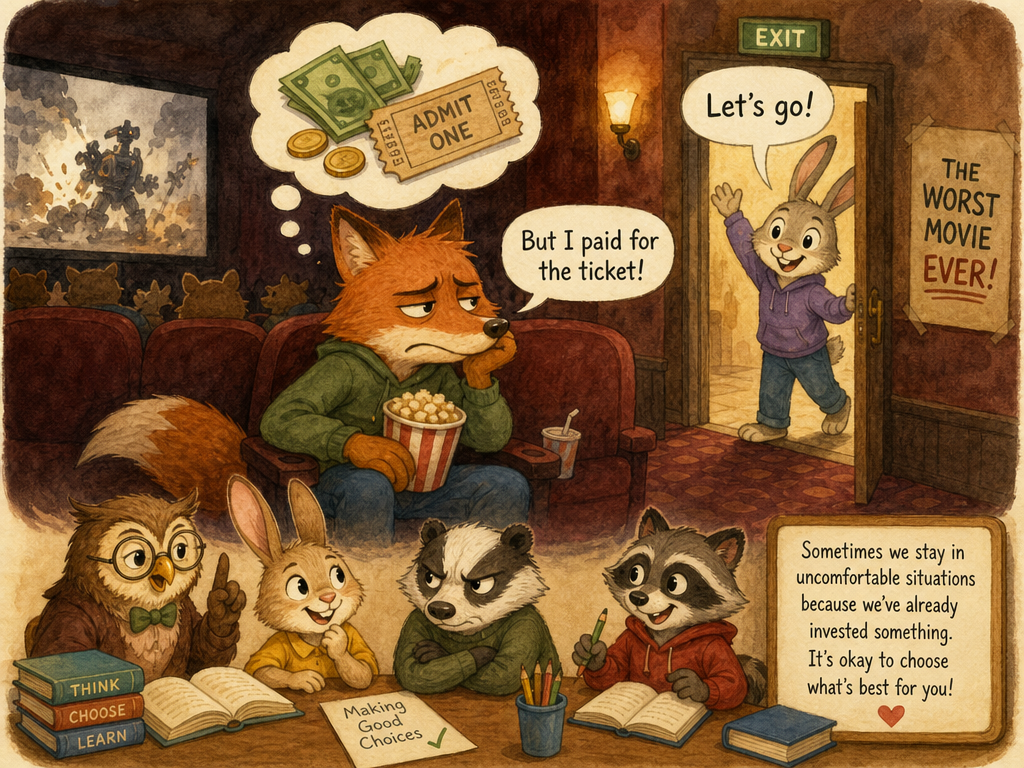
The sunk cost fallacy is when you keep doing something because you've already put time, money, or effort into it — even when quitting would actually be the smarter choice. The resources you've already spent are "sunk" — they're gone no matter what.
AT THE MOVIES
That $15 is gone whether you stay or leave. Staying means you waste the money AND two hours of your life on a bad movie. Leaving only wastes the money.
VIDEO GAMES
Those 200 hours are gone forever. Spending ANOTHER 200 miserable hours doesn't get them back. It just adds more wasted time.
AT DINNER
Overeating doesn't un-spend the money. The food's cost is a sunk cost whether it goes in your stomach or in a container for tomorrow.
ABOUT A BOOK
Those 150 pages are gone. The only question that matters is: "Will reading the REST make me happy?" If not, pick up a better book!
Your brain hates waste. Quitting feels like admitting that all that time and effort was wasted, and that's painful. So your brain tricks you into continuing — even when continuing wastes even MORE. It's like digging a hole deeper because you don't want to admit you're in the wrong spot.
Ask: "If I were starting fresh right now — with zero time or money invested — would I choose to do this?" If the answer is no, the smart move might be to stop.
What would the sunk cost fallacy tell you to do? What would clear thinking tell you?
"I'm Basically an Expert"
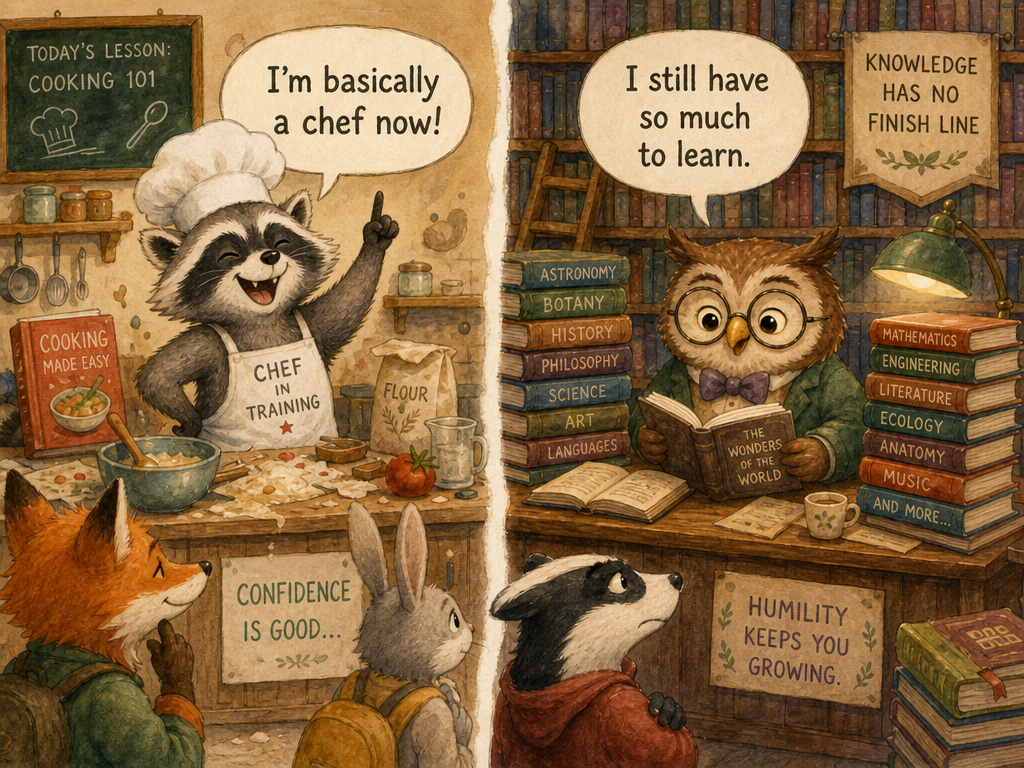
The Dunning-Kruger Effect is a brain bug with two sides: people who know very little about something tend to be overconfident about their ability, while people who know a lot tend to underestimate themselves. A little knowledge makes you think you're an expert. A lot of knowledge shows you how much you still don't know.
IN THE KITCHEN
The kid doesn't know enough to know what they don't know. The chef has learned SO much that they can see the enormous ocean of knowledge still ahead.
LEARNING GUITAR
This is the classic Dunning-Kruger curve: confidence spikes early (when you don't know enough to know what you're missing), then crashes as you realize the real complexity, then slowly builds again on solid ground.
IN VIDEO GAMES
The beginner hasn't faced the real challenges yet. The expert has, and knows how far the skill ceiling goes.
ABOUT A SCHOOL TOPIC
One video gives you just enough knowledge to feel confident. Thirty years of study shows you how vast the unknown is.
When you know very little, you lack the knowledge to judge your own skill accurately. You don't know what you don't know! As you learn more, you start seeing the gaps. Experts have learned enough to recognize just how complex the subject really is.
Ask: "How much time have I actually spent learning this? Could there be a LOT I haven't been exposed to yet?" The most dangerous moment is right after you learn the basics — that's when overconfidence peaks.
Who's more likely to be right about how complicated it is? What brain bug is your friend experiencing?
"Pretty Must Mean Perfect"
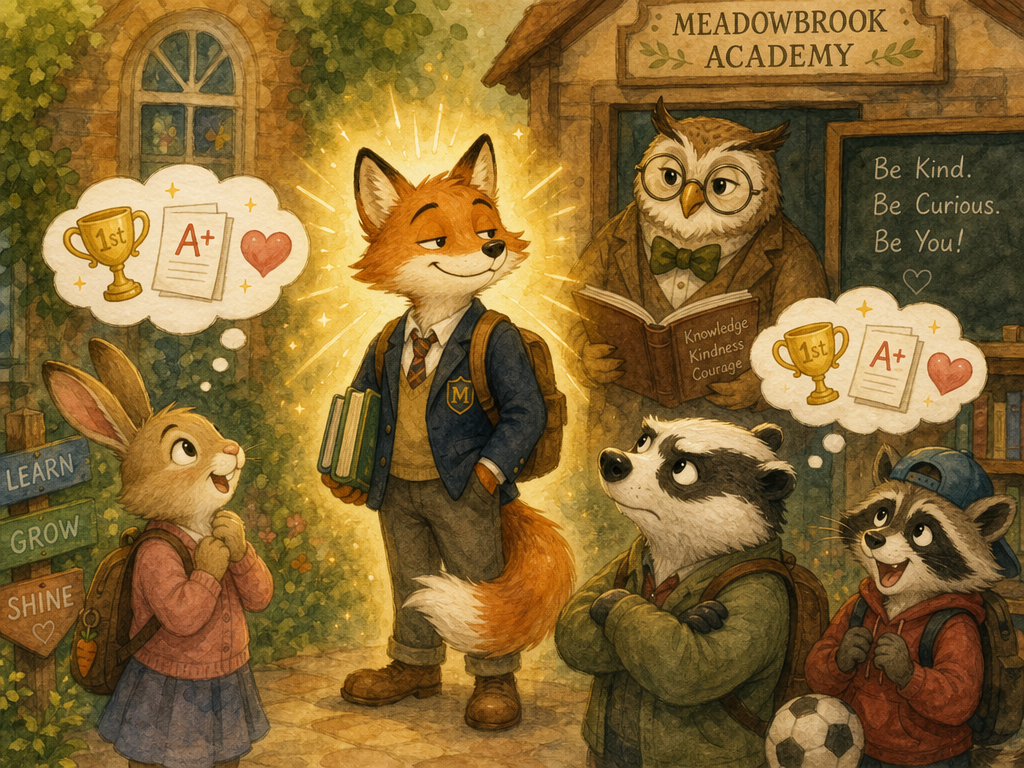
The halo effect is when you assume someone is good at everything because they're good at one thing — or because they're attractive, popular, or famous. One positive trait creates a "halo" that makes everything else about them glow too.
AT SCHOOL
Jaylen's basketball talent creates a halo. People assume he must also be a great leader, organizer, and decision-maker — without any evidence for those skills.
ABOUT CELEBRITIES
Being talented or famous in one area doesn't make someone an expert in everything. But the halo makes us FEEL like it does.
IN A GROUP PROJECT
Emma's art skills created a halo that made everyone assume she'd also be the best presenter. Different skills!
ABOUT APPEARANCES
This is real! Studies show that attractiveness creates a halo that affects how people judge your work, intelligence, and even your honesty. Unfair? Absolutely. But knowing about it helps you fight it.
Your brain likes simple stories. "Good at one thing = good at everything" is a nice, tidy shortcut. Building a complete, accurate picture of someone takes effort, so your brain paints with a broad brush instead.
Ask: "Am I assuming this person is good at X just because they're good at Y? What actual evidence do I have for each skill separately?"
What created the halo? What assumptions did people make, and why were they wrong?
"The Bad Stuff Sticks"
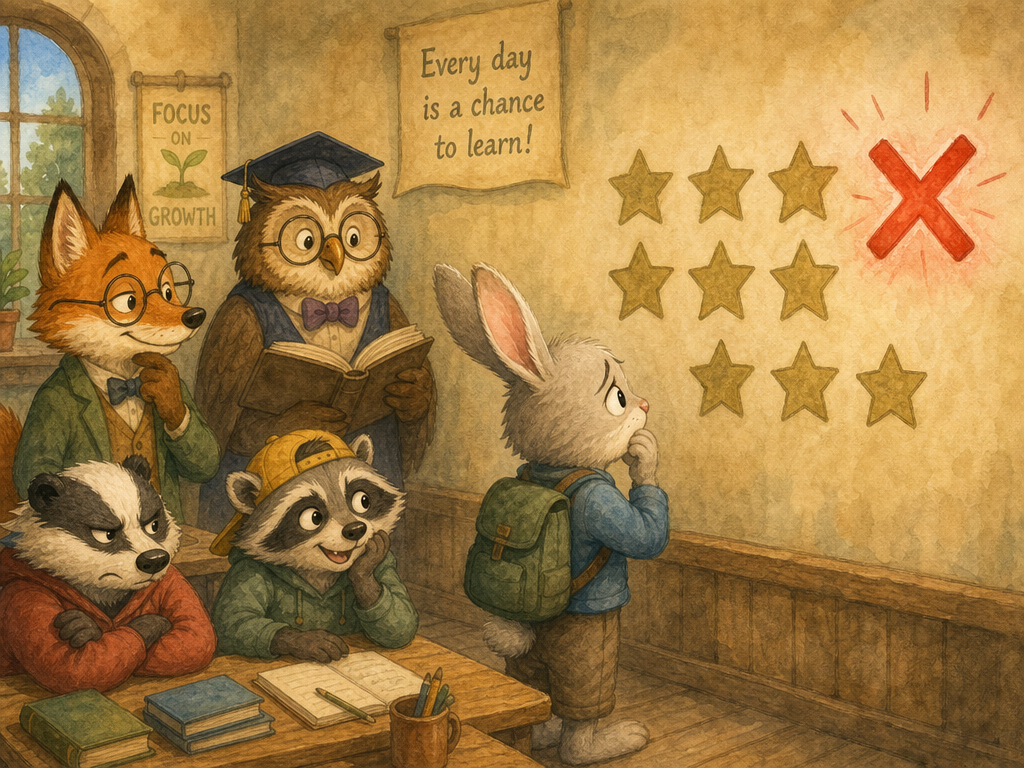
Negativity bias is when bad experiences, criticism, and negative events hit your brain MUCH harder than equally positive ones. One insult can outweigh ten compliments. One bad day can overshadow a great week.
AT A PERFORMANCE
Ten people said you were great. One person mentioned a mistake. Guess which one your brain decides to replay on an endless loop? The negative one, every time.
ONLINE
Researchers have found it takes roughly FIVE positive interactions to cancel out ONE negative one. Your brain weights negativity about 5x heavier.
ON VACATION
Six great days reduced to one bad memory. Your brain files the negative experience in bold, underlined, highlighted text while the good days get filed in tiny print.
ABOUT A TEACHER
The one negative interaction (the C grade) overwrites multiple positive ones in your memory.
In ancient times, paying extra attention to dangers kept you alive. Remembering where the predator was mattered more than remembering where the pretty flowers were. Your brain evolved to prioritize threats. The problem? It still does this even when the "threat" is just a mean comment or a bad grade.
Ask: "Am I focusing on one bad thing while ignoring many good things?" Try writing down three good things that happened today alongside the one bad thing. Seeing them side by side helps your brain recalibrate.
Count the positives vs. the negatives in that feedback. Why does your brain focus on the one suggestion?
"But We've Always Done It This Way!"
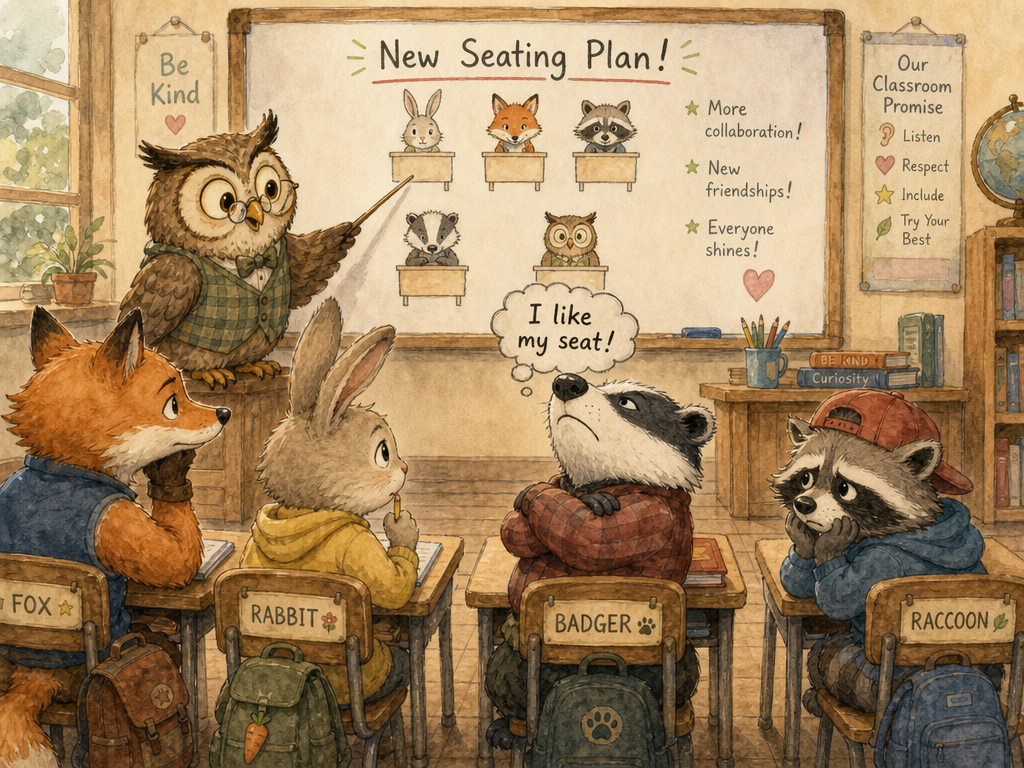
Status quo bias is the tendency to prefer things to stay the same, even when change would make things better. Your brain treats the current situation as the default "safe" option and views any change as risky.
AT LUNCH
Even when you're bored with the current option, your brain prefers the "known okay" over the "possibly great, possibly bad."
IN A CLASSROOM
The initial reaction to ANY change is resistance. But once the change happens, people often prefer the new arrangement. The fear of change was worse than the change itself.
ABOUT TECHNOLOGY
Every app update gets complaints. A month later, most people love the changes. Your brain resists change first and adjusts later.
ABOUT ROUTINES
The original reason for the routine is gone, but the routine feels permanent. "We've always done it this way" is one of the most powerful brain bugs there is.
Change requires mental energy. Your brain has to think about new possibilities, weigh risks, and adapt. Sticking with what you know takes zero effort. So your brain whispers, "Why risk it?" — even when the current situation isn't that great.
Ask: "Am I keeping things the same because it's actually the best option, or just because it's familiar?" Imagine you were choosing for the first time. Would you still pick the current way?
Is "what we always do" being chosen because it's the best, or just because it's familiar? What brain bug is at work?
"Everyone Is Staring at Me!"
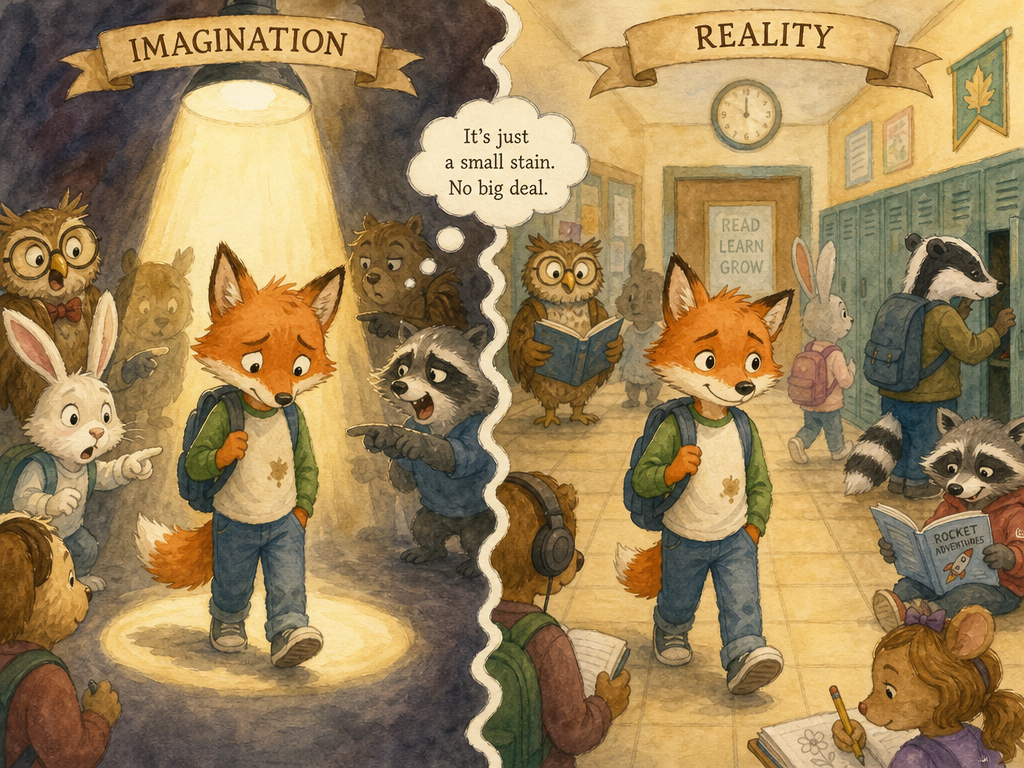
The spotlight effect is when you overestimate how much other people notice your appearance, mistakes, or behavior. You feel like there's a spotlight on you, but in reality, most people are way too busy thinking about themselves to notice.
AT SCHOOL
That pimple felt like it had its own spotlight and sound effects. In reality, other people are thinking about their OWN pimples.
IN THE CAFETERIA
In a famous experiment, students wore embarrassing T-shirts to class. They guessed that about half their classmates noticed. The actual number? Less than 25%. People notice you about HALF as much as you think.
ABOUT CLOTHES
You remember every outfit you wear. Other people don't keep a mental catalog of your wardrobe. They're worried about their own.
AFTER A MISTAKE
Your brain replays your embarrassments like a highlight reel. Other people's brains are busy replaying THEIR OWN embarrassments.
You are the center of YOUR world. You experience everything from your own perspective, so naturally, you assume everyone else is focused on you too. But here's the secret: everyone else is the center of THEIR world. They're thinking about themselves, not you.
Ask: "Can I remember what shirt my friend wore two days ago? Can I remember the last embarrassing thing someone else did?" If you can't remember theirs, they probably can't remember yours either.
What brain bug made you think everyone noticed every "um"? What does the evidence actually show?
"It'll Only Take Five Minutes!"
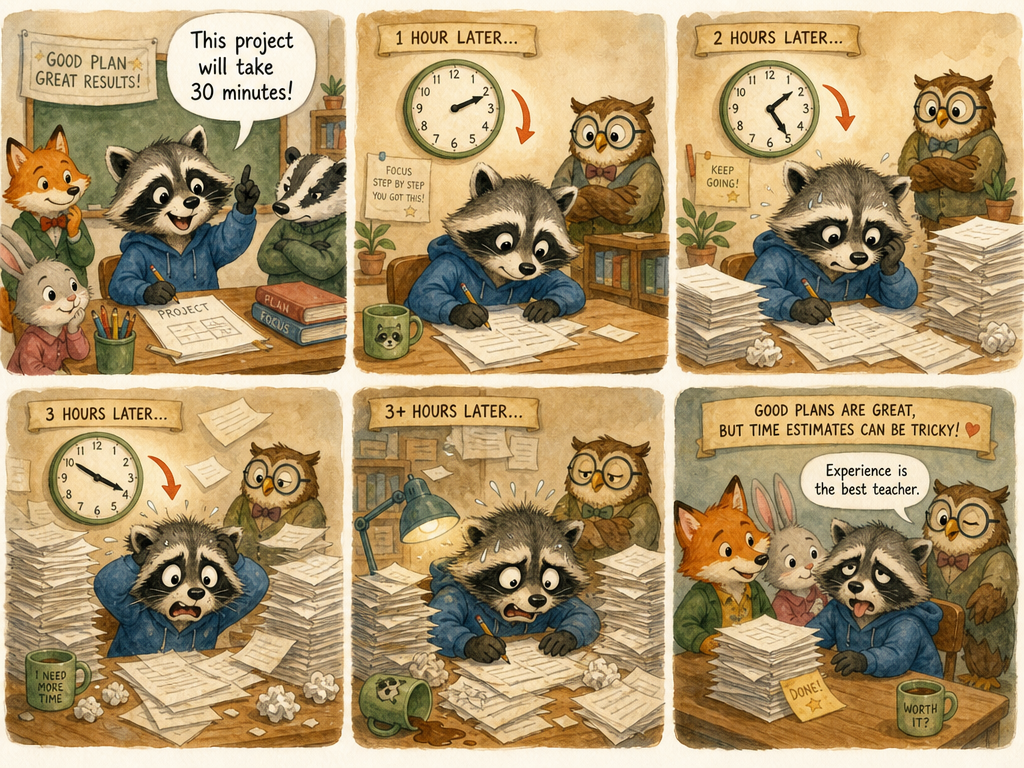
The planning fallacy is the tendency to underestimate how long tasks will take, how much they'll cost, and how many things could go wrong — even when you've been wrong about this exact same thing many times before.
HOMEWORK
You estimated the best-case scenario where everything went perfectly. Your brain forgot about research, formatting, spell-checking, and the 20 minutes you spent looking for a snack.
GETTING READY
"Just brush my teeth" turned into brushing teeth, changing clothes, finding shoes, going back for a water bottle, and looking for the phone. Every small task has hidden sub-tasks.
GROUP PROJECTS
Groups are ESPECIALLY bad at planning because everyone assumes someone else has started. The planning fallacy multiplies with more people.
A FAMOUS EXAMPLE
This isn't just a kid problem. Governments, companies, and experts routinely underestimate timelines. The planning fallacy spares nobody.
When you imagine doing a task, your brain pictures the ideal scenario — no interruptions, no mistakes, no surprises. It's like planning a road trip by measuring a straight line on a map instead of following the actual winding roads. Your brain ignores all the bumps, detours, and traffic.
Ask: "How long did this take LAST time?" Use your past experience, not your optimistic imagination. A simple trick: whatever time you estimate, multiply it by 1.5 or 2. You'll almost always be closer to reality.
What's a more realistic estimate? What hidden sub-tasks did your brain skip?
"We All Agree... Right?"
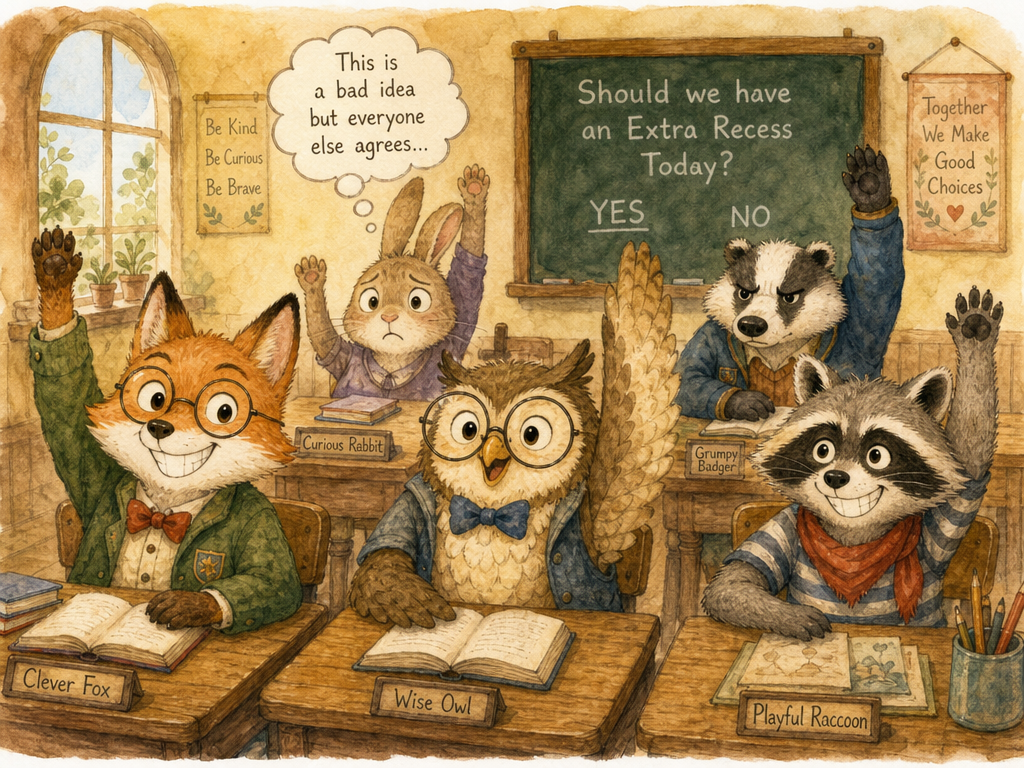
Groupthink happens when a group values agreement and harmony so much that nobody speaks up with concerns or different ideas. Everyone goes along with the group to avoid conflict, even when they privately disagree. The result? The group makes decisions nobody actually wanted.
PICKING A MOVIE
NOBODY actually wanted the action movie — they all just went along because they thought everyone else did. This is sometimes called the Abilene Paradox: a group agrees on something nobody wanted.
IN A GROUP PROJECT
Silence gets treated as agreement. Everyone waits for someone else to speak up first, and when nobody does, the group "agrees" on something nobody was excited about.
ABOUT CLOTHING
Once a group trend starts, it feeds itself. Nobody wants to be the first to say "I don't actually like this" because being different feels risky.
A REAL-WORLD EXAMPLE
That fairy tale is about groupthink! It shows how powerful the pressure to agree is — and how one brave voice can break the spell.
Humans are social animals. Being part of a group kept our ancestors safe. Disagreeing with the group meant risking rejection, which in ancient times could mean danger. So your brain sends strong signals: "Don't rock the boat. Agree. Fit in." The problem? Groups that never disagree make terrible decisions.
Ask: "Am I agreeing because I actually agree, or because I don't want to be the odd one out?" Before the group discusses, write down your opinion privately. Then compare it to what you said out loud. If they're different, groupthink might be at work.
What would happen if you spoke up? What if everyone else was also secretly hoping for a different plan?
"Too Many Options!"
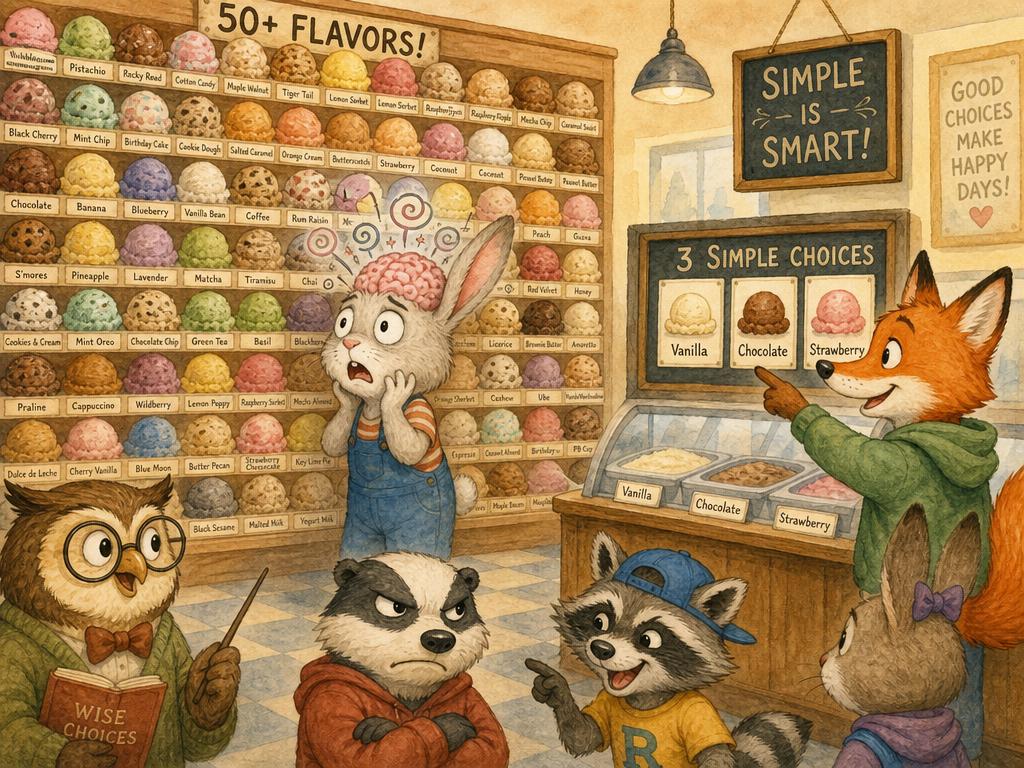
Choice overload (also called the "paradox of choice") is when having too many options makes you worse at deciding, not better. You either freeze up and can't choose at all, make a worse choice because you're overwhelmed, or feel unhappy with what you picked because you keep wondering if another option was better.
AT A RESTAURANT
Too many options overloads your brain's decision-making system. Instead of feeling free, you feel paralyzed. A simpler menu with 10 options? You'd pick something in 30 seconds.
ON STREAMING SERVICES
When there were only 5 TV channels, people picked a show and watched it. With unlimited options, you spend more time choosing than watching — and you're less satisfied with what you pick.
THE JAM EXPERIMENT
More choices made people LESS likely to decide. Fewer choices made it easy to pick and feel good about it.
ABOUT VIDEO GAMES
The kid with 200 games spends all their time choosing instead of playing. The kid with 3 games dives in and enjoys the experience because the choice is simple.
SCHOOL PROJECTS
Complete freedom sounds great but often leads to paralysis. A few constraints actually HELP you make better decisions.
Every option requires your brain to evaluate it: "Is this better or worse than the last one?" With 5 options, that's manageable. With 50, your brain runs out of processing power. Plus, more options mean more "paths not taken" to regret. You chose the pizza, but what about the pasta? The salad? The tacos? Each unchosen option becomes a tiny "what if?"
Ask: "Am I stuck because there are too many options?" If so, try narrowing it down: eliminate everything that's clearly not great, then choose from the top 3. Set a time limit for decisions that don't really matter. And remember: a "good enough" choice made quickly is usually better than a "perfect" choice you never make.
Who's having a better experience? What brain bug made 50 flavors feel like a burden instead of a gift?
5 questions to debug your thinking
Understanding brain bugs isn't about becoming a robot who never makes mistakes. It's about giving yourself an upgrade.
When you can catch your own brain bugs, you:
Your brain is incredible. It just has some quirky bugs in its code. Now that you know the bugs exist, you can watch for them — and that puts YOU back in control.
Here's the most important brain bug of all: thinking you're immune to brain bugs. EVERYONE has them. Scientists who study biases still fall for them. Knowing about them doesn't make you immune — it just gives you a fighting chance.
So be patient with yourself. When you catch a brain bug in action, don't feel bad. Feel proud. Catching the glitch IS the skill. Every time you pause and think, "Wait — is my brain tricking me right now?" you're debugging your thinking in real time.
And that's a superpower.
Your brain is the most powerful tool you have. Now you know how to use it even better.