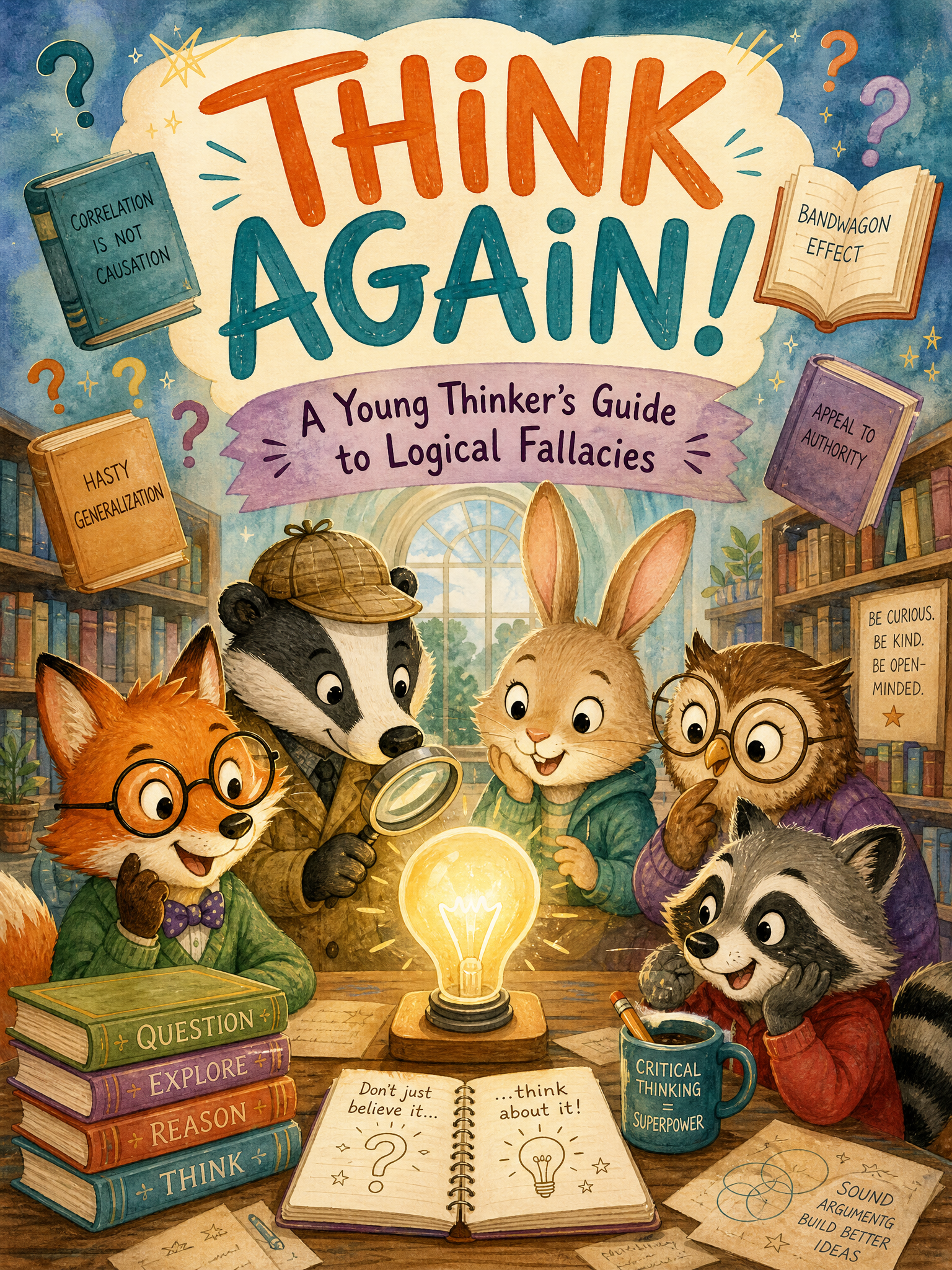
Think Again! Book Cover
By VJ Siddhaiyan

What's Inside

  1. Straw Man
  2. Ad Hominem
  3. Appeal to Bandwagon
  4. Appeal to Fear
  5. False Dilemma
  6. Slippery Slope
  7. Argument from Consequences
  8. Appeal to Irrelevant Authority
  9. Not a Cause for a Cause
  10. Hasty Generalization
  11. Appeal to Ignorance
  12. Equivocation
  13. No True Scotsman
  14. Genetic Fallacy
  15. Guilt by Association
  16. Affirming the Consequent
  17. Appeal to Hypocrisy
  18. Circular Reasoning
  19. Composition and Division

Welcome, Young Thinker!

Your brain is about to get a major upgrade.

Have you ever been in an argument where something felt wrong about what the other person said, but you couldn't explain exactly what it was?

Maybe your friend said, "Everyone is getting the new phone, so it must be the best one!" Or maybe someone told you, "You can't say my idea is bad — you got a C on your last test!"

These are called logical fallacies — sneaky mistakes in reasoning that sound convincing but are actually broken. They're like optical illusions for your brain. Once you learn to spot them, you'll see them everywhere: in arguments at school, in ads on TV, on social media, and even in conversations at the dinner table.

What Is an Argument?

Before we dive into bad arguments, let's make sure we know what a good one looks like.

An argument isn't just people yelling at each other. In logic, an argument is a set of statements where some (called premises) support another statement (called the conclusion).

Example of a good argument:
Premise 1: All mammals breathe air.
Premise 2: Dogs are mammals.
Conclusion: Therefore, dogs breathe air.

That's solid! The premises lead logically to the conclusion.
A logical fallacy is when the premises DON'T actually support the conclusion, even though it might feel like they do. It's like building a bridge out of paper — it looks like it connects, but try to walk across it and... SPLASH.

This book will teach you 19 logical fallacies with tons of examples from real life — school, sports, friendships, and family. Think of it as your cheat code for arguments. Ready? Let's go!

The 19 Logical Fallacies

"The first principle is that you must not fool yourself — and you are the easiest person to fool." — Richard Feynman
Fallacy #1

Straw Man

"That's not what I said!"
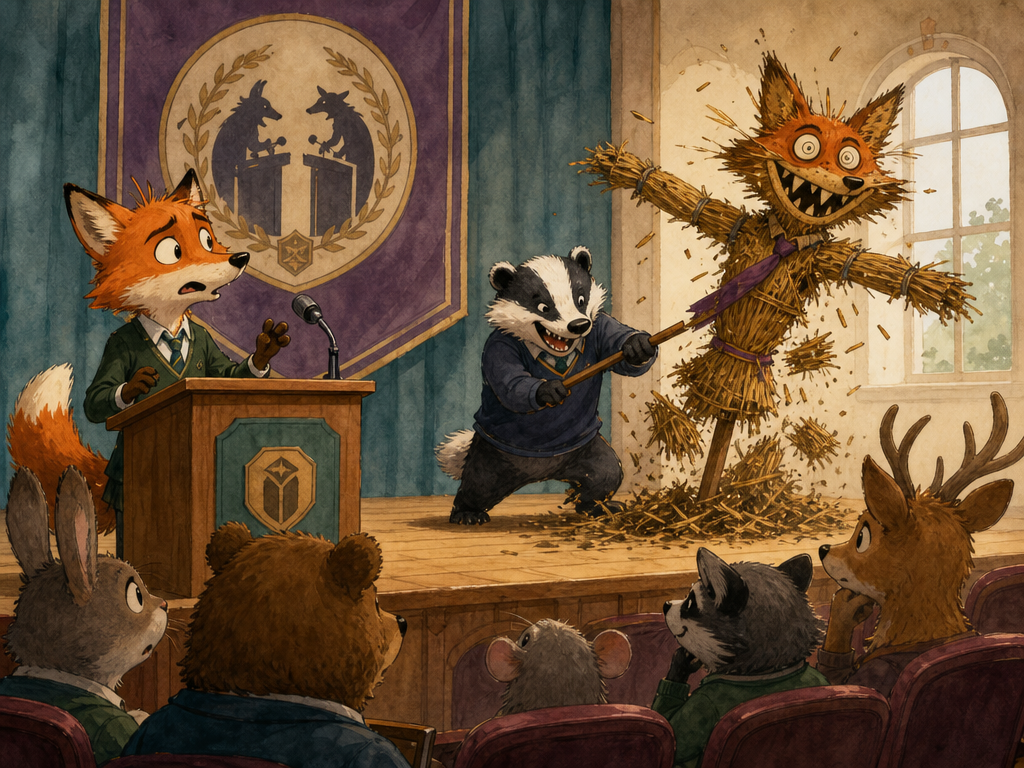
Straw Man - A badger attacks a scarecrow version of a fox's argument

What Is It?

A Straw Man is when someone twists what you said into something you didn't say — and then attacks that instead. It's like they built a scarecrow version of your argument because it's easier to knock down.

Examples from Your World

At School
Maya: "I think we should have 10 more minutes for lunch so we don't have to rush."
Jake: "Maya thinks we should spend all day eating and never go to class!"

Maya never said that! Jake turned "10 more minutes" into "all day." That's a straw man.

With Friends
You: "I don't want to watch that horror movie — I don't like scary stuff."
Friend: "Oh, so you're saying all movies should be boring baby cartoons?"

You never said anything about baby cartoons. Your friend built a straw man.

On a Team
Coach: "Let's add more passing drills to practice."
Player: "Coach wants to get rid of shooting practice completely!"

The coach said more passing drills, not no shooting. Straw man!

In Your Family
You: "Can we get a dog?"
Parent: "So you want our house to turn into a zoo? Next you'll want horses and elephants!"

You asked for ONE dog. Not a zoo. Classic straw man.

Why It's Wrong

Attacking a twisted version of someone's argument proves nothing about their actual argument. It's like winning a race that nobody else was running.

How to Spot It

Ask yourself: "Is this person responding to what was actually said, or did they change it into something more extreme?"

Try It! Can You Find the Straw Man?

"We should recycle more." → "Oh, so you think we should live in caves and give up all technology?"

What was the original argument? What did it get twisted into?
Fallacy #2

Ad Hominem

"Attacking the person, not the idea"
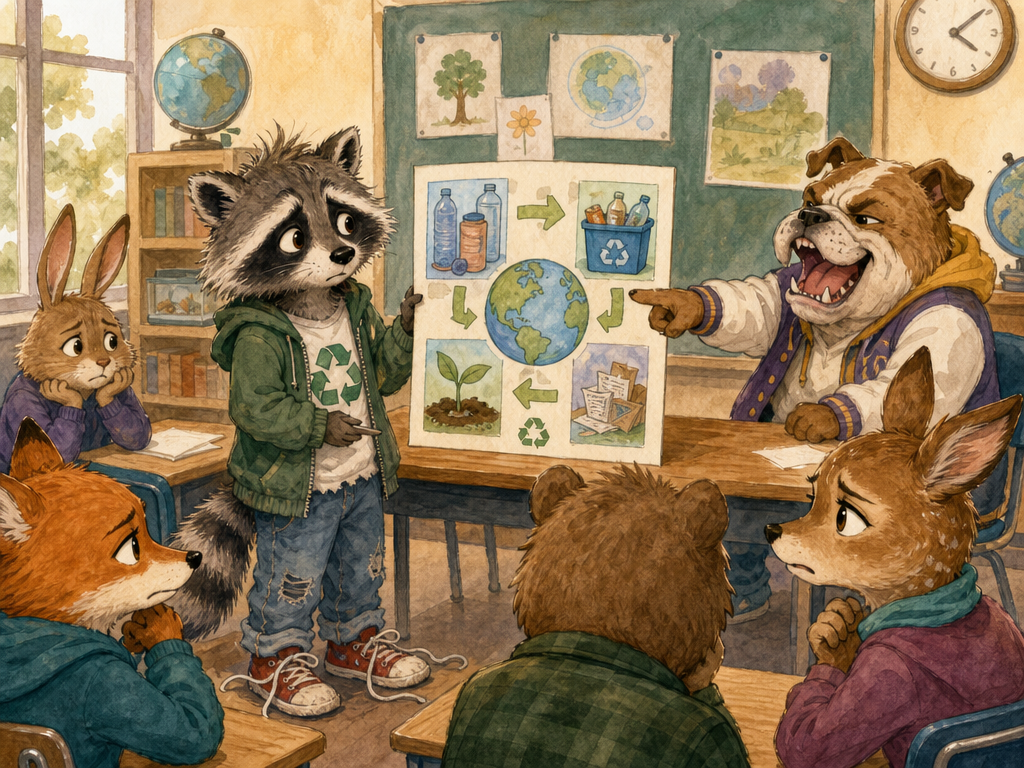
Ad Hominem - A bulldog attacks a raccoon personally instead of their argument

What Is It?

Ad Hominem (Latin for "to the person") means attacking the person making an argument instead of attacking their argument. It's a way of dodging what someone said by making it about who they are.

Examples from Your World

In Class
Student: "I think our school should start a recycling program."
Other Student: "Why should we listen to you? You're the one who always forgets your homework!"

Whether they forget homework has NOTHING to do with whether recycling is a good idea.

At Lunch
Alex: "I think the book we're reading in English is actually really good."
Sam: "You think it's good? You got a D on the last book report!"

Alex's grade doesn't determine whether the book is good or not.

Online
Kid 1: "I think skateboarding should be an after-school activity."
Kid 2: "You can't even ride a skateboard without falling. Why should anyone listen to you?"

You don't need to be a pro skater to have a good idea about school activities.

In Sports
Bench player: "I think we should try a zone defense."
Starter: "You barely play. You don't know anything about strategy."

Playing time doesn't determine if someone understands strategy.

Why It's Wrong

An argument is either good or bad based on its OWN logic — not based on who said it. A great idea is still great even if it comes from someone you don't like.

How to Spot It

Ask yourself: "Is this person responding to the idea, or are they just criticizing the person who said it?"

Try It!

"You can't tell me to eat healthy — I saw you eating candy yesterday!"

Is this about the argument or the person? What's the fallacy?
Fallacy #3

Appeal to Bandwagon

"Everyone's doing it!"
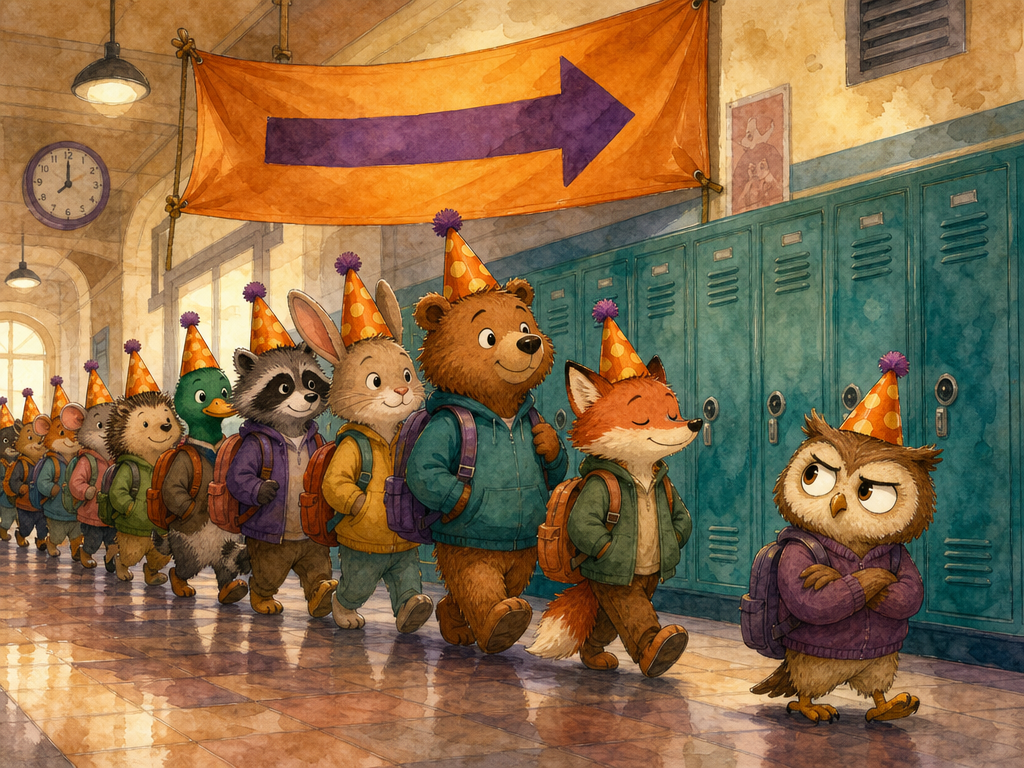
Bandwagon - Animals following each other in a parade with party hats

What Is It?

The Bandwagon Fallacy is when someone argues that something must be true or good just because lots of people believe it or do it. "If everyone's jumping off a bridge..." as your parents probably say.

Examples from Your World

At the Store
"But Mom, EVERYONE at school has these sneakers! They must be the best ones!"

Just because everyone has them doesn't make them the best shoes. It might just mean great advertising.

About Music
"That song has a billion views on YouTube. It must be the best song ever written."

Popularity doesn't equal quality. Lots of great songs never go viral.

School Elections
"Vote for Marcus — he's already winning in the polls! You don't want to vote for the loser."

This doesn't tell you anything about Marcus's actual ideas or plans.

A Lesson from History
Hundreds of years ago, most people believed the Earth was the center of the universe. Most people were wrong. Galileo was one of the few who was right.

Why It's Wrong

Truth isn't decided by a popularity vote. A million people can all be wrong, and one person can be right. Evidence and logic determine what's true, not how many people agree.

How to Spot It

Ask yourself: "Is the only reason given that 'lots of people' think this? Is there any actual evidence?"

Try It!

"This is the most-downloaded app. It has to be safe and good for kids."

What's the fallacy? What would a better argument look like?
Fallacy #4

Appeal to Fear

"If you don't agree, something TERRIBLE will happen!"
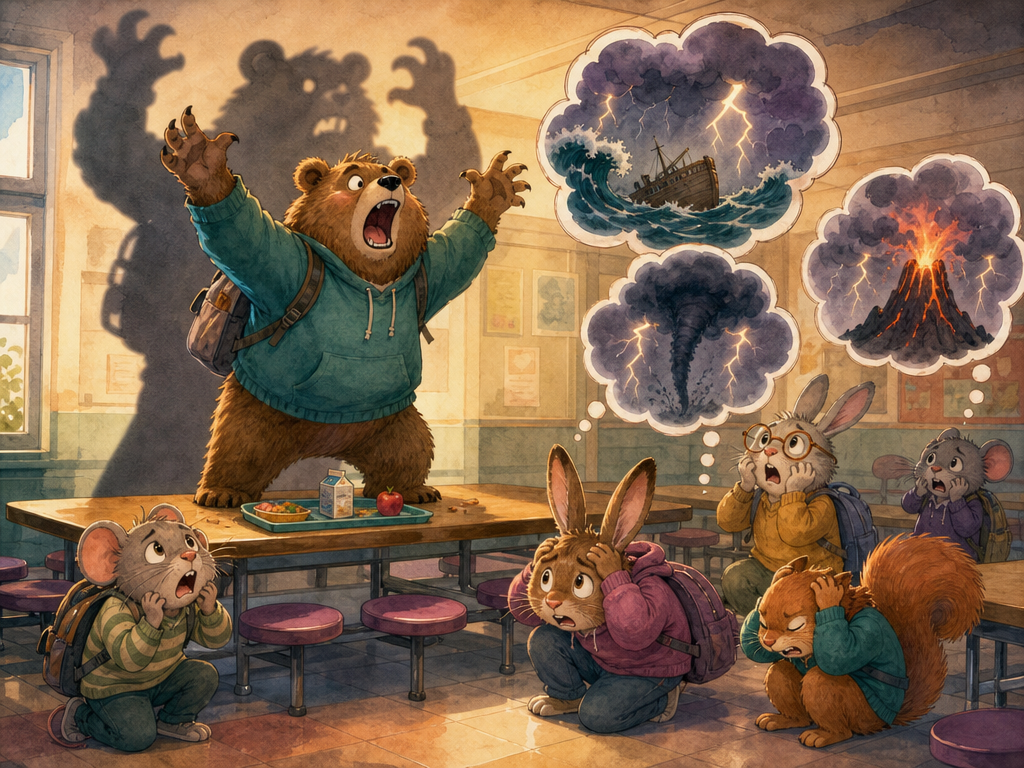
Appeal to Fear illustration

What Is It?

An Appeal to Fear tries to scare you into agreeing instead of giving you actual reasons. Instead of evidence, it uses threats, worst-case scenarios, or frightening predictions.

Examples from Your World

From an Older Sibling
"If you tell Mom I broke the vase, I'll make sure no one at school talks to you ever again."

That's not a reason why you shouldn't tell — it's a threat disguised as an argument.

In a Group Project
"We have to do the project MY way. If we do it your way, we'll definitely fail and everyone will be embarrassed."

There's no evidence your way would fail. They're just using fear of failure to get their way.

About Rules
"If we let students pick their own seats, the whole school will fall into chaos and no one will learn anything ever again!"

One small change leading to total catastrophe? That's fear talking, not logic.

Why It's Wrong

Being scared about something doesn't make the scary prediction true. Good arguments use evidence, not emotions.

How to Spot It

Ask yourself: "Is this argument giving me evidence or just trying to scare me?"

Try It!

"If we don't pick this restaurant for the field trip, the other restaurant will probably give everyone food poisoning!"

What's the fallacy? What evidence is actually given?

Fallacy #5

False Dilemma

"It's either THIS or THAT — no other options!"
False Dilemma illustration

What Is It?

A False Dilemma (also called "black and white thinking") is when someone presents only two options when there are actually more. It forces you into a choice that isn't real.

Examples from Your World

About Homework
"Either you love homework or you don't care about your future."

What about: you don't love homework, but you do it because you understand it's useful? Way more than two options!

In Friendships
"You're either my best friend or you're my enemy."

People can be regular friends, acquaintances, or just classmates. There aren't only two categories!

About Hobbies
"You can either be a serious athlete or a serious student — you can't be both."

Lots of people excel at both sports AND academics. This is a false choice.

About Entertainment
"You either like Marvel movies or DC movies. Pick a side!"

Why not both? Or neither? Or some from each?

Why It's Wrong

Most choices in life have more than two options. When someone gives you only two, they're hiding the other possibilities — usually because those hidden options would weaken their argument.

How to Spot It

Ask yourself: "Are these really the only two options? What other choices exist that aren't being mentioned?"

Try It!

"You can either eat everything on your plate or go to bed hungry."

What options are being left out?

Fallacy #6

Slippery Slope

"If we allow THIS, then the WORLD ENDS!"
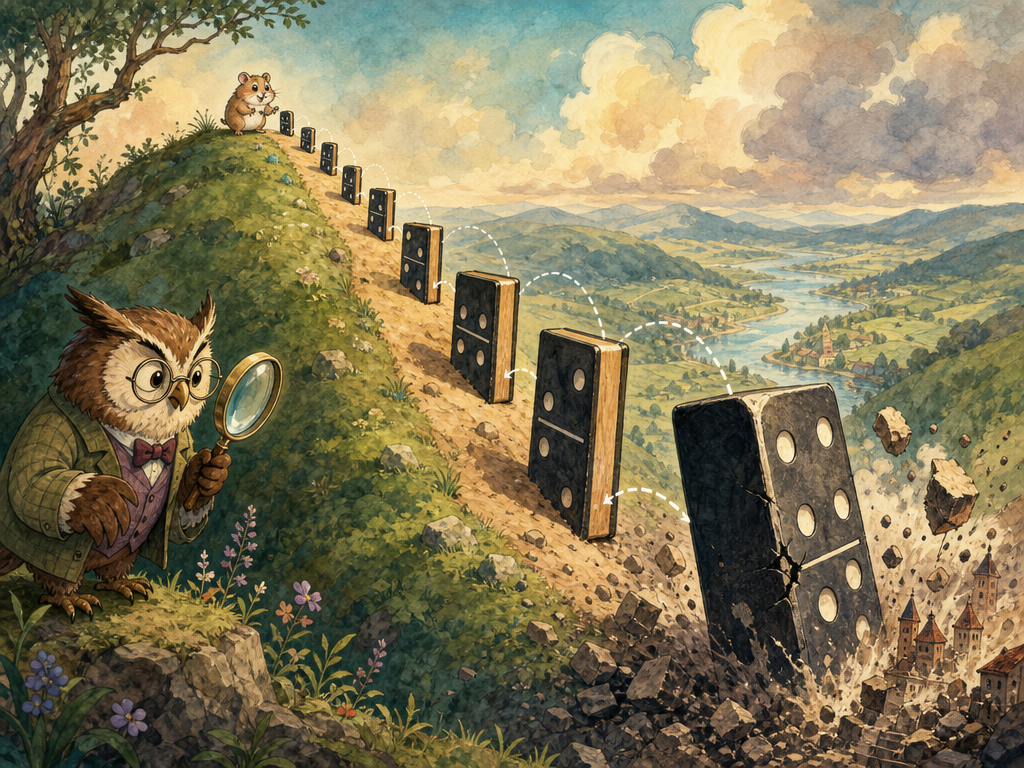
Slippery Slope illustration

What Is It?

A Slippery Slope argument claims that one small step will inevitably lead to a chain of increasingly terrible events — like a snowball rolling downhill. The problem? There's no evidence any of those steps will actually happen.

Examples from Your World

About Screen Time
"If I let you have 30 extra minutes of screen time, next you'll want an hour, then two hours, and before you know it you'll be playing video games 24/7 and flunking out of school!"

Getting 30 extra minutes doesn't automatically lead to failing school. Each step would be its own decision.

About Rules
"If we let students wear hats in school, next they'll want pajamas, then costumes, and eventually nobody will wear clothes at all!"

Hats ≠ pajamas ≠ costumes. Each one is a separate decision.

About a Pet
"If we get a hamster, then you'll want a dog, then a cat, then a horse, and soon we'll be running an animal shelter!"

A hamster is just a hamster. Future decisions are future decisions.

Why It's Wrong

Just because step A happens doesn't mean steps B, C, D, E, and F will all automatically follow. Each step in the chain needs its own evidence.

How to Spot It

Ask yourself: "Does step A really guarantee step B? Is there evidence for each step, or is it all just guessing?"

Try It!

"If the teacher lets you retake one test, soon every student will want to retake every test, and grades will become meaningless!"

What's the slippery slope? Are the steps actually connected?
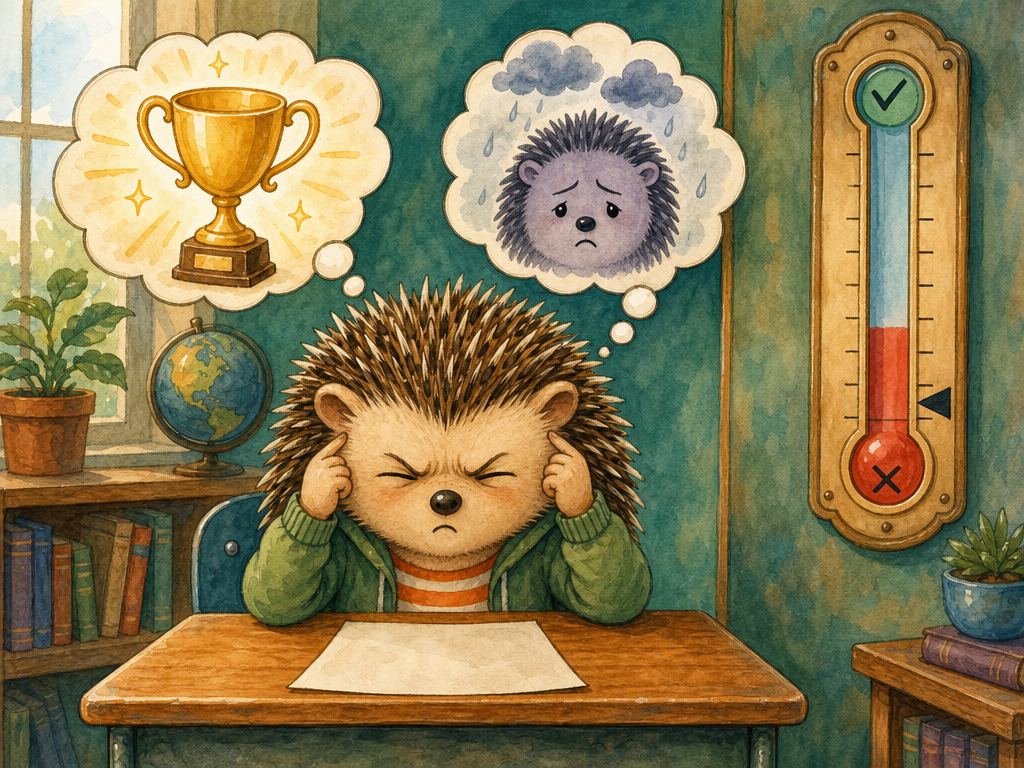
Fallacy #7

Argument from Consequences

"It MUST be true because I want it to be!"
Argument from Consequences illustration

What Is It?

This fallacy says something is true (or false) based on whether the consequences are good (or bad). But whether you like the result has nothing to do with whether it's true.

Examples from Your World

About a Test
"I can't have failed that test. If I did, I won't make the honor roll. So I must have passed."

Whether failing has bad consequences doesn't change your actual score.

About a Friend
"Sarah would never lie to me. If she did, our whole friendship would be fake. So she must be telling the truth."

Not wanting something to be true doesn't make it false.

About Moving
"We can't be moving to a new city. I'd have to leave all my friends. So it must not be true."

Your feelings about moving don't determine whether it's happening.

Why It's Wrong

The truth doesn't care about our feelings. Something can be true even if we don't like it. Evidence determines truth, not consequences.

How to Spot It

Ask yourself: "Is this based on evidence, or just on whether they'd like it to be true?"

Try It!

"The coach can't cut me from the team. That would be so unfair. So there's no way it'll happen."

Is this evidence or wishful thinking?
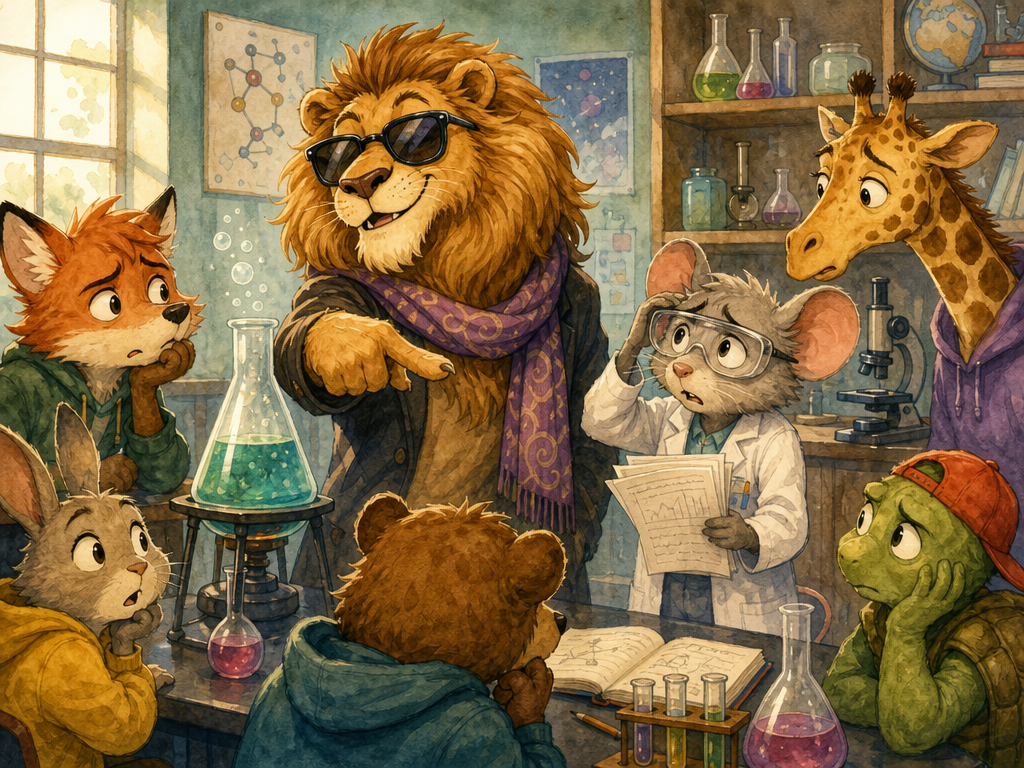
Fallacy #8

Appeal to Irrelevant Authority

"But a FAMOUS PERSON said so!"
Appeal to Authority illustration

What Is It?

When someone says something must be true because a famous or important person said it — even if that person isn't an expert on the topic.

Examples from Your World

About Health
"My favorite YouTuber says this vitamin drink is amazing, so it must be healthy."

Great at making videos ≠ nutrition expert.

About Science
"My uncle who's a lawyer says climate change isn't real."

Being a lawyer doesn't make someone a climate scientist. That's like asking your dentist to fix your car.

About Tech
"This famous actress uses this phone, so it must be the best one."

Being famous doesn't make someone a tech expert. They probably got paid to say that!

Why It's Wrong

Expertise in one area doesn't transfer to another. What matters is whether the person is actually an expert on the specific topic.

How to Spot It

Ask: "Is this person actually an expert on this specific topic?"

Try It!

"The world's best soccer player says this math tutoring app is the best. It must be!"

Is a soccer player an authority on math education?
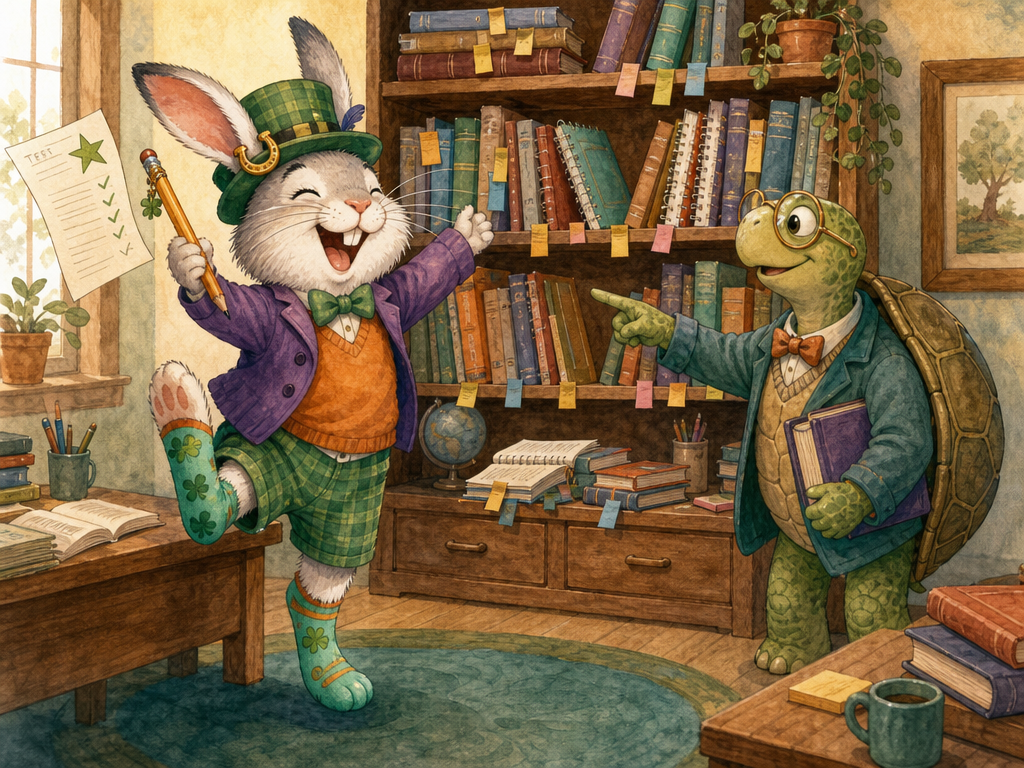
Fallacy #9

Not a Cause for a Cause

"This happened, then THAT happened, so THIS must have CAUSED that!"
False Cause illustration

What Is It?

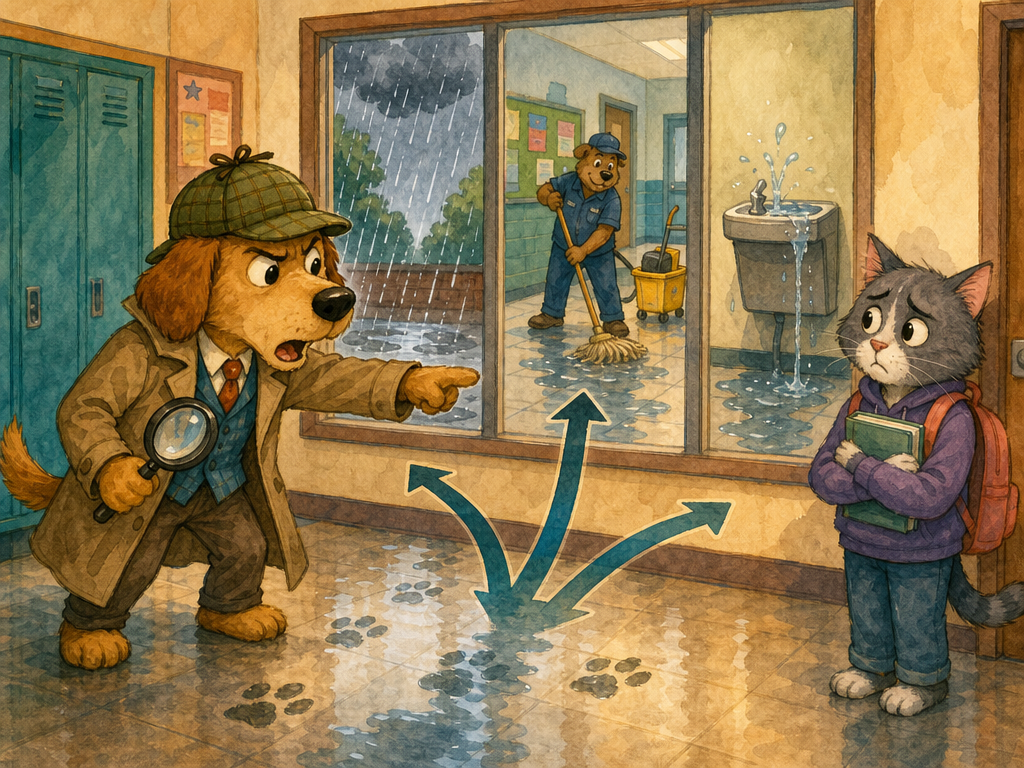
This fallacy happens when someone assumes that because two things happened around the same time, one must have caused the other. Correlation is NOT causation!

Examples from Your World

Lucky Charms
"I wore my lucky socks and we won the game. My socks caused us to win!"

Your team's skill caused the win, not the socks.

Weather
"Every time I wash my dad's car, it rains the next day. I cause rain!"

Coincidence, not cause and effect.

A Classic
"Ice cream sales go up in summer. Drowning incidents go up in summer. Therefore, ice cream causes drowning!"

No! Both are caused by hot weather. More people eat ice cream AND go swimming when it's hot.

Why It's Wrong

Just because A happened before B doesn't mean A caused B. There could be a coincidence, a third factor, or no connection at all.

How to Spot It

Ask: "Is there actual proof that A caused B? Could something else explain it?"

Try It!

"I started sitting in the front row and my grades improved. Sitting in the front row must make you smarter!"

What else could explain the grade improvement?

Fallacy #10

Hasty Generalization

"I saw it once, so it MUST always be true!"
Hasty Generalization illustration

What Is It?

Drawing a big conclusion from too little evidence. It's like tasting one grape and declaring, "ALL fruit is sour!"

Examples from Your World

New School
"My first day at the new school was terrible. This school is the worst in the world."

One bad day doesn't represent the whole school experience.

About Food
"I tried sushi once and didn't like it. I hate ALL Japanese food."

Sushi is just one dish. There are hundreds of others!

About People
"I met one kid from that school who was rude. Everyone there must be rude."

Judging an entire school by one person? That's like judging an ocean by one drop of water.

Why It's Wrong

The smaller your sample, the less likely it represents the whole picture. Scientists know you need LOTS of data before drawing conclusions.

How to Spot It

Ask: "How many examples is this conclusion based on? Is that enough?"

Try It!

"Both of my friends who play video games have bad grades. Video games cause bad grades."

Is two friends a big enough sample?

Fallacy #11

Appeal to Ignorance

"You can't PROVE me wrong, so I must be right!"
Appeal to Ignorance illustration

What Is It?

Saying something must be true because no one has proven it false, OR that something must be false because no one has proven it true.

Examples from Your World

Supernatural
"You can't prove ghosts DON'T exist, so they must be real!"

By that logic, invisible unicorns are real too!

Mysteries
"Scientists can't fully explain how the pyramids were built, so aliens must have helped."

Not knowing the full explanation doesn't mean ANY explanation is correct.

Bigfoot
"Nobody has proven Bigfoot doesn't exist. He must be out there!"

Decades of looking and not finding Bigfoot is actually evidence he probably doesn't exist.

Why It's Wrong

The burden of proof is on the person making the claim. "You can't disprove it" is never a good argument.

How to Spot It

Ask: "Is this based on actual evidence, or just 'you can't prove me wrong'?"

Try It!

"No one has proven that eating chocolate before a test DOESN'T help. So it probably does!"

Where's the actual evidence?

Fallacy #12

Equivocation

"Switching the meaning of a word mid-argument"
Equivocation illustration

What Is It?

Sneakily using a word with two different meanings in the same argument, hoping you won't notice the switch. It's a word trick.

Examples from Your World

Being "Cool"
"The teacher said to keep a cool head during tests. Ice cream is cool. So we should eat ice cream during tests!"

"Cool" (calm) and "cool" (cold) are totally different meanings.

Being "Right"
"Everyone has the right to an opinion. My opinion is right. Therefore, everyone should agree with me."

"Right" (entitled to) vs. "right" (correct) — totally different!

About "Nothing"
"Nothing is better than pizza. A salad is better than nothing. Therefore, a salad is better than pizza."

"Nothing" changes meaning between sentences!

Why It's Wrong

Words need to keep the same meaning throughout an argument. Switching meanings is like changing the rules of a game mid-play.

How to Spot It

Ask: "Is this word being used the same way in every part of the argument?"

Try It!

"Stars are in the sky. Movie stars are stars. So movie stars must be in the sky!"

Where does the word "star" change meaning?
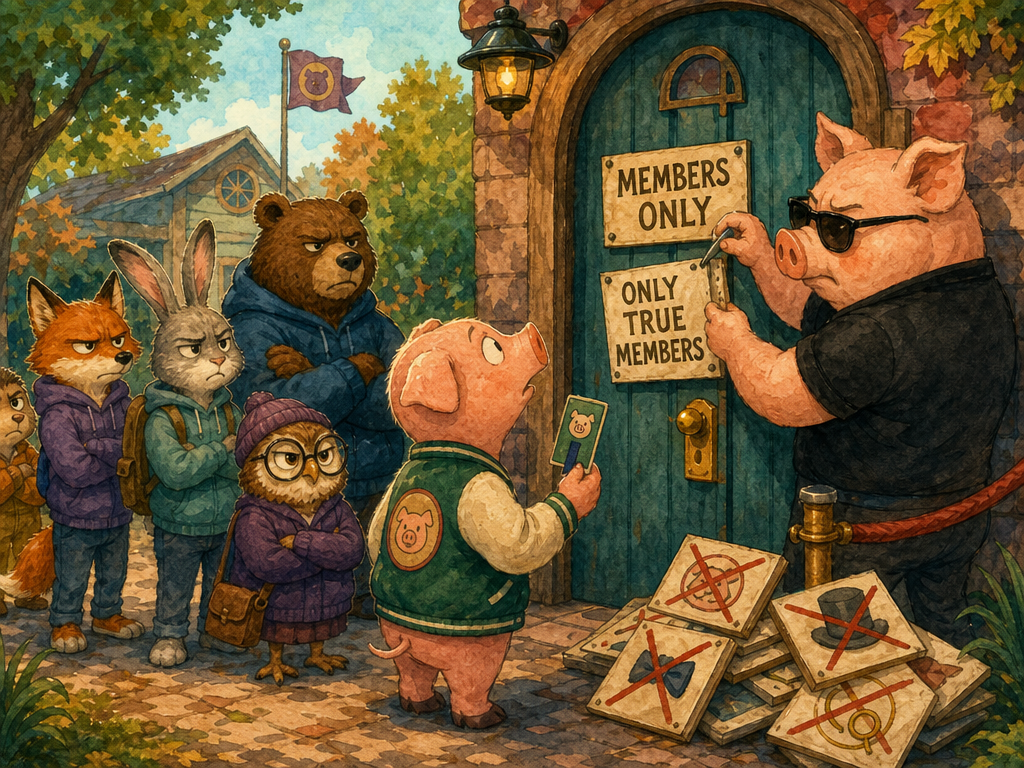
Fallacy #13

No True Scotsman

"Well, no REAL one would do that..."
No True Scotsman illustration

What Is It?

When someone makes a general claim, gets shown an exception, and then changes the definition to exclude the exception instead of admitting they were wrong.

Examples from Your World

About Fans
Kid 1: "All basketball fans know every player's stats."
Kid 2: "I'm a fan and I don't memorize stats."
Kid 1: "Well, you're not a REAL fan then."

Instead of admitting not all fans memorize stats, Kid 1 just changed what "real fan" means.

About Gamers
Kid 1: "Gamers only play on PC."
Kid 2: "I play on console."
Kid 1: "You're not a TRUE gamer."

Gatekeeping! The definition keeps shifting to protect the claim.

Why It's Wrong

If you keep changing the definition to exclude every exception, your claim becomes meaningless. It can never be proven wrong.

How to Spot It

Ask: "Did this person just change their definition to avoid being proven wrong?"

Try It!

"Good students always do homework." → "But Emma skips sometimes." → "She's not a truly good student then."

What's being redefined?

Fallacy #14

Genetic Fallacy

"That idea came from a bad place, so it must be bad"
Genetic Fallacy illustration

What Is It?

Judging an idea based on where it came from rather than on its own merits. Like refusing to eat a delicious meal because you don't like the restaurant's name.

Examples from Your World

From Younger Kids
"That idea came from a fourth grader. What would they know?"

Even a younger kid can have a great idea. Judge the idea, not the age.

Rival Schools
"Their science fair project can't be that good — it came from Lincoln Middle School, our rivals."

Being rivals doesn't make their work bad. Evaluate the project!

New Kids
"That suggestion came from the new kid. She just got here — what does she know?"

Fresh perspectives can actually be really valuable.

Why It's Wrong

Where an idea comes from has nothing to do with whether it's GOOD. A bad source can produce a great idea.

How to Spot It

Ask: "Is this idea being judged on its quality, or just because of where it came from?"

Try It!

"My little brother had a good idea, but I won't use it because he's only in third grade."

What's wrong with this reasoning?

Fallacy #15

Guilt by Association

"You like the same thing as a bad person? You must be bad too!"
Guilt by Association illustration

What Is It?

Saying an idea must be bad because a bad person supports it, or that a person must be bad because they share a trait with a bad group.

Examples from Your World

Music Taste
"You like the same band as that bully? You must be just as mean."

Liking the same music doesn't make you similar in any other way.

About Food
"The meanest kid in school likes pizza. I guess pizza is bad now."

Come on. Pizza didn't do anything wrong!

About Ideas
"You think school uniforms are good? You know who else liked uniforms? The bad guys in every history book."

Sharing ONE opinion doesn't make someone like a historical villain.

Why It's Wrong

People can share one trait while being completely different in every other way. Judge opinions by their quality, not by who else holds them.

How to Spot It

Ask: "Is this idea rejected just because a disliked person supports it?"

Try It!

"You want more homework? That's what the strict substitute said. You must want to ruin everyone's day."

What's the fallacy?

Fallacy #16

Affirming the Consequent

"Backward logic"
Affirming the Consequent illustration

What Is It?

Mixing up the direction of an "if-then" statement. Just because "If A then B" is true doesn't mean "If B then A" is also true.

Examples from Your World

About Rain
"If it's raining, the ground is wet. The ground is wet. So it must be raining."

The ground could be wet from a hose, sprinkler, or burst pipe!

About Dogs
"If an animal is a dog, it has four legs. This animal has four legs. So it must be a dog."

Cats, horses, rabbits — tons of animals have four legs!

About Students
"Good students get A's. Sarah got an A. So Sarah must be a good student."

Maybe Sarah got lucky on that test or is great at just that one subject.

Why It's Wrong

"If A then B" does NOT mean "If B then A." Multiple different causes can lead to the same result.

How to Spot It

Ask: "Is someone working backward and assuming only ONE thing could have caused this result?"

Try It!

"If you study hard, you'll pass. You passed. You must have studied hard."

What other explanations are there?

Fallacy #17

Appeal to Hypocrisy

"You do it too!"
Appeal to Hypocrisy illustration

What Is It?

Deflecting criticism by pointing out that the critic does the same thing. Also called "tu quoque" (Latin for "you too"). It dodges the argument entirely.

Examples from Your World

About Chores
Parent: "You need to clean your room."
Kid: "YOUR closet is messy too!"

Your parent's closet being messy doesn't change the fact that your room needs cleaning.

Screen Time
Parent: "You spend too much time on your phone."
Kid: "You're on YOUR phone all the time!"

Even if true, it doesn't address whether YOU're on yours too much.

Eating Healthy
Teacher: "You should eat more vegetables."
Student: "I saw you eating pizza in the teacher's lounge!"

The teacher eating pizza doesn't make vegetables less healthy.

Why It's Wrong

Whether the advisor follows their own advice doesn't change whether the advice is GOOD. A doctor who smokes is still right that smoking is bad.

How to Spot It

Ask: "Is this person addressing the argument, or just saying 'but you do it too'?"

Try It!

"You should stop staying up late." → "Well, you stayed up until midnight last weekend!"

Is the advice wrong just because the advisor doesn't always follow it?
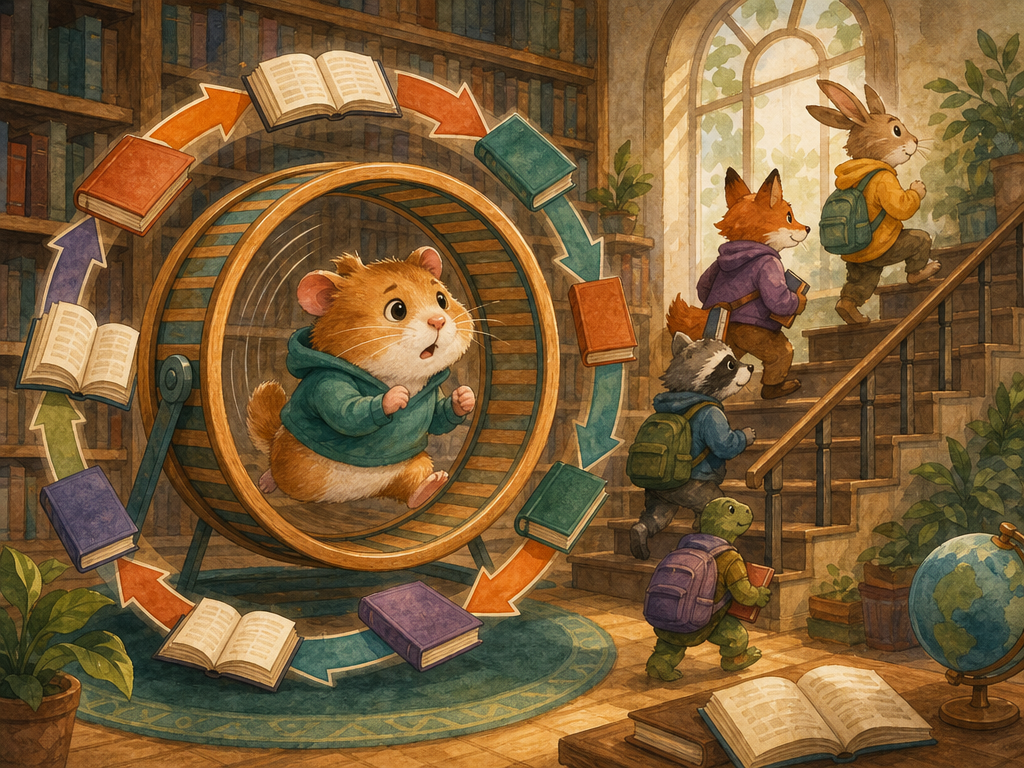
Fallacy #18

Circular Reasoning

"It's true because it's true because it's true..."
Circular Reasoning illustration

What Is It?

Circular Reasoning is when someone's proof for their claim is just their claim restated. Like a dog chasing its own tail — you go around and around but never get anywhere.

Examples from Your World

About Rules
Kid: "Why do I have to go to bed at 9?"
Parent: "Because 9 o'clock is your bedtime."
Kid: "But WHY?"
Parent: "Because that's when you have to go to bed."

The "reason" is just the rule stated again!

About Popularity
"This is the best song because it's better than all the other songs."

"It's the best because it's the best." That's a circle!

About Trust
"You can trust me because I'm honest." — "How do I know you're honest?" — "Because I'm telling you I am."

Going around in circles!

Why It's Wrong

An argument needs SEPARATE evidence to support a conclusion. If the evidence is just the conclusion in disguise, you haven't proven anything.

How to Spot It

Ask: "If I rephrase the 'evidence,' is it the same as the conclusion?"

Try It!

"I deserve the best grade because my work is highest quality." → "What makes it highest quality?" → "It deserves the best grade."

Can you trace the circle?

Fallacy #19

Composition and Division

"The parts are great, so the whole must be great!"
Composition and Division illustration

What Is It?

Two related fallacies: Composition = assuming the whole has a quality because its parts do. Division = assuming each part has a quality because the whole does.

Examples from Your World

Composition (Parts → Whole)
"Every player on our team is the best at their position. So our team must be the best."

A team also needs teamwork and chemistry! Great individual players ≠ great team.

Composition (Cooking)
"Chocolate is delicious. Ketchup is delicious. So chocolate with ketchup must be delicious!"

Great parts don't always combine into a great whole.

Division (Whole → Parts)
"Our school has the highest average test score, so every student must be smart."

Averages hide variation. Some may struggle while others excel.

Division (Sports)
"The team won, so every player must have played well."

The team might have won despite some players having an off day.

Why It's Wrong

What's true for parts isn't always true for the whole, and vice versa. A chain is only as strong as its weakest link.

How to Spot It

Ask: "Is someone assuming what's true for pieces must be true for the whole, or vice versa?"

Try It!

"Every song on this album is great, so this must be the greatest album ever."

Is this composition, division, or actually reasonable?

Becoming a Fallacy Detective

Your 5 magic questions to spot any fallacy

Your Fallacy-Spotting Toolkit

1
Is the argument actually about the TOPIC? Catches: Straw Man, Ad Hominem, Appeal to Hypocrisy
2
Is the evidence real, or is it just emotions? Catches: Appeal to Fear, Appeal to Bandwagon, Argument from Consequences
3
Are there hidden options being left out? Catches: False Dilemma, Slippery Slope
4
Is the reasoning going in the right direction? Catches: Affirming the Consequent, Not a Cause for a Cause, Circular Reasoning
5
Is this a fair representation? Catches: Hasty Generalization, No True Scotsman, Composition/Division, Equivocation, Genetic Fallacy, Guilt by Association, Appeal to Ignorance, Appeal to Authority

Why This Matters

Learning logical fallacies isn't about winning arguments. It's about thinking clearly.

When you can spot bad reasoning, you:

The world is full of noise. Learning to think logically is like putting on glasses for the first time — suddenly everything is clearer.

One Last Thing

Nobody's perfect. Even now that you know these fallacies, you'll probably catch yourself using them! That's totally normal. The goal isn't perfection — it's awareness.

And remember: the goal of a good argument isn't to win. It's to get closer to the truth. If someone points out a fallacy in YOUR reasoning, that's not an attack — it's a gift.

Now Go Out There and Think Again!

"The first principle is that you must not fool yourself — and you are the easiest person to fool."
— Richard P. Feynman

Glossary

Argument — A set of statements (premises) intended to support a conclusion.
Premise — A statement used as evidence to support a conclusion.
Conclusion — The statement that an argument is trying to prove.
Logical Fallacy — An error in reasoning that makes an argument invalid.
Burden of Proof — The responsibility to provide evidence falls on the person making the claim.
Correlation — When two things happen together or in sequence.
Causation — When one thing actually causes another.
Deductive Argument — If the premises are true, the conclusion MUST be true.
Inductive Argument — If the premises are true, the conclusion is PROBABLY true.